A bonsai tree looks calm in a photo, but it is a living plant that has already survived a long journey. Many imported bonsai are grown in Japan, China, Taiwan or Southeast Asia, shipped across borders, and then sent again to your door. If you are shopping at an online nursery for imported bonsai plants in Hyderabad, a little checking before you pay can save you money and heartbreak.
This guide walks you through what to look at in the listing, what to ask the seller, and how to prepare for delivery, so you can order with confidence.
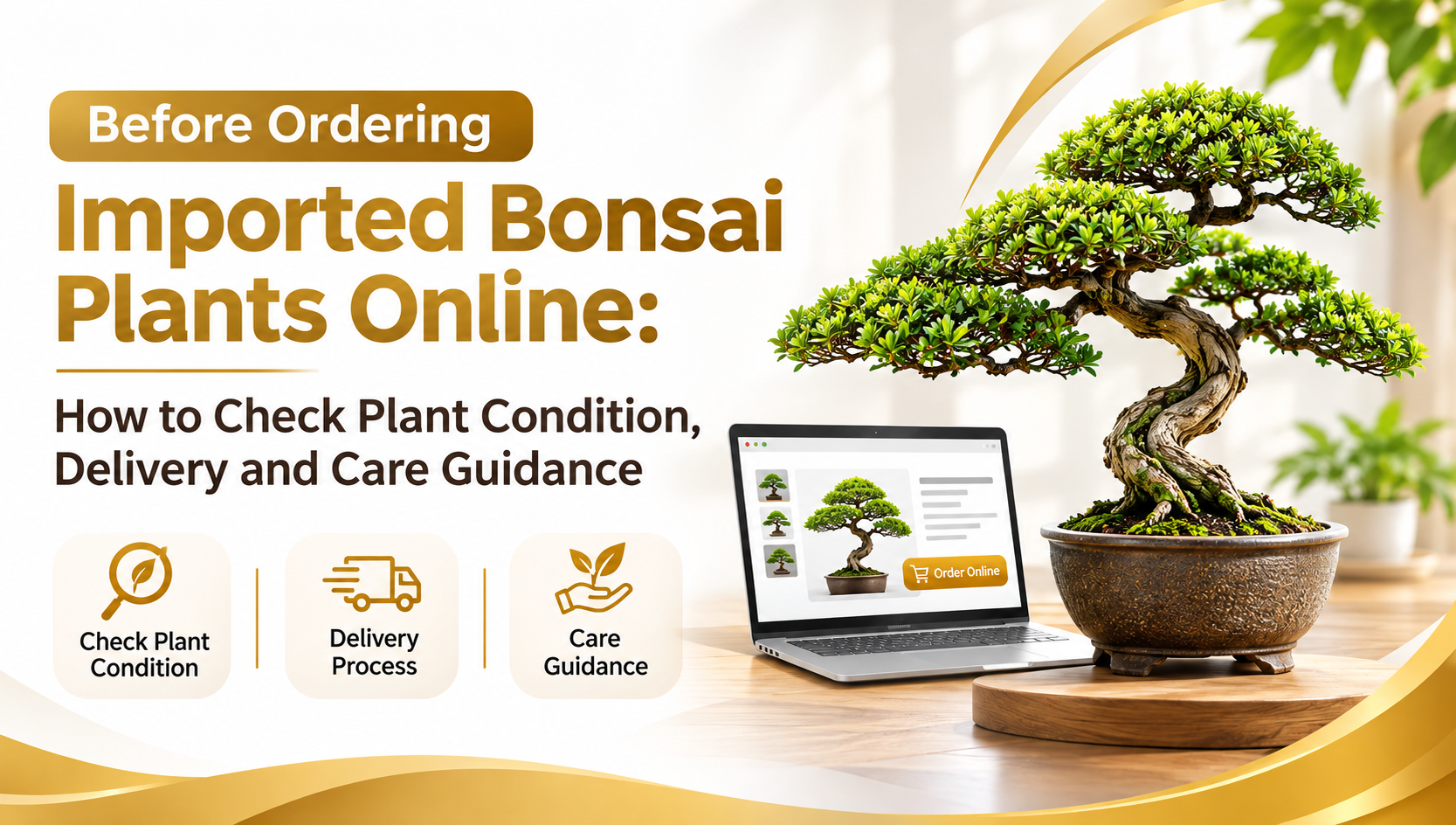
Why Imported Bonsai Needs More Checking Than a Regular Houseplant
A pothos or a money plant forgives most mistakes. A bonsai does not. The tree sits in a shallow pot with a small amount of soil, so it dries out quickly, and it can also rot quickly if the soil stays wet.
Imported trees add a second layer of risk. They have gone through travel stress, a change of climate and, often, a long wait before reaching a seller. A tree that looked perfect in its home country may arrive tired, and Hyderabad’s heat and monsoon humidity will test it further.
None of this means you should avoid imported bonsai. It means you should buy from a garden nursery for imported bonsai plants in Hyderabad that explains its plants clearly, rather than one that only posts attractive pictures.
Step 1: Check the Plant Condition Before You Pay
Look at the photos with a critical eye
Good listings show the actual tree you will receive, not a stock image. Look for:
- Photos taken from several angles, including the trunk base and the top of the soil.
- Leaves that look firm and evenly coloured, not curled, spotted or sticky.
- A trunk that looks solid, with no soft patches or peeling, damp bark.
- A pot that is stable and clean, with visible drainage holes.
If every picture is a polished studio shot, ask for a recent photo or a short video. A nursery that is proud of its stock will usually send one without fuss.
Ask about the roots and soil
The roots decide whether a bonsai lives, yet most buyers never ask about them. Ask the seller:
- Has the tree been repotted recently, and how long ago?
- What soil mix is it growing in?
- Has it been acclimatised to Indian weather, or did it only just arrive?
A tree that has had a few months to settle in Indian conditions is a much safer purchase than one unpacked last week. That alone is a strong reason to prefer a seller who keeps plants in local conditions before selling them.
Match the species to Hyderabad’s climate
Not every bonsai species enjoys a hot, humid city. Some handle it well, while others struggle badly.
- Often easier in warm climates: Ficus varieties, Carmona (Fukien tea), Serissa, Jade and Bougainvillea.
- Usually harder: Junipers, pines and Japanese maples, which prefer cooler weather and noticeable seasonal change.
Ask which species the nursery recommends for your balcony or terrace, and whether the tree needs full sun, bright shade or protection from afternoon heat. If a seller says every bonsai suits every home, treat that as a warning.
Step 2: Ask Where the Plant Came From and What Paperwork Exists
Plant imports are regulated in India, and legally imported plants normally come with proper phytosanitary documentation. You do not need to read the rules in full, but it is fair to ask:
- Was this tree imported through proper channels?
- Where was it grown, and for how long has it been in the nursery’s care?
- Is it grown locally from an imported base, or is it a fully imported tree?
A trustworthy online nursery for imported bonsai plants in Hyderabad will answer plainly. Hesitation or vague answers are worth noticing, because they often point to weak sourcing.
Age matters too. Some listings describe a tree as “old” or “mature” without proof. Unless the seller can explain how they know, treat age claims as marketing rather than fact.
Step 3: Look Closely at Delivery Before You Order
Delivery is where many online plant orders go wrong, so read this part of the listing as carefully as the plant description.
Packaging
Ask how the plant will be packed. Good packing usually means the pot is secured so the soil does not spill, the trunk and branches are supported, and the whole box is marked as live plants. Loose soil and snapped branches usually mean the tree was handled roughly.
Timing and weather
Bonsai handle short journeys better than long ones. Ask:
- How many days will delivery take to your address?
- Will the nursery ship during extreme heat or heavy rain?
- Who is responsible if the tree arrives damaged?
Either the nursery should offer a clear replacement or refund process, or it should state honestly that live plants carry risk. Neither a silent policy nor a vague promise is good enough.
What to do on arrival
Open the box in front of the courier if you can, and take photos or a short video straight away. Check the leaves, the trunk and the soil moisture. If something looks wrong, report it to the seller the same day, with pictures. Most reputable sellers need that proof to help you.
Step 4: Ask for Care Guidance Before, Not After
A good seller does not disappear once payment is made. Before you order, ask whether the nursery will share written care instructions for your specific tree. Useful guidance covers:
- Light: how many hours of sun, and whether the tree can stay indoors.
- Watering: how to judge when the soil is dry, rather than watering on a fixed schedule.
- Feeding: which fertiliser, and how often.
- Seasonal care: what to do in peak summer and during the monsoon.
- Pruning and repotting: when to start, and what to avoid in the first few months.
Care advice that is specific to Hyderabad is especially valuable. Generic instructions written for cold countries can mislead you, because a tree that needs a winter rest in Japan will not get the same one here.
What a Good Boutique Nursery Does Differently
When people search for the best boutique plant nursery for imported bonsai plants in Hyderabad, they usually mean one thing: a seller who treats each tree individually. In practice, a boutique nursery tends to:
- Keep smaller batches, so each plant gets proper attention.
- Share honest photos, including flaws such as a scar, a bare patch or a slightly uneven shape.
- Explain species, sourcing and care without being asked repeatedly.
- Stay reachable after delivery.
Bigger is not always better. A small, careful seller often beats a large marketplace listing, especially for a plant as sensitive as bonsai. The same logic applies when you compare any plant nursery for imported bonsai plants in Hyderabad: look at how it answers questions, not only at what it sells.
A Quick Pre-Order Checklist
Before you click “buy,” make sure you can say yes to most of these:
- I have seen recent photos of the actual tree.
- I know the species and whether it suits my light and balcony.
- I know roughly how long the tree has been in the nursery’s care.
- I have asked about roots, soil and recent repotting.
- I understand the packing method and the delivery timeline.
- I know the replacement or refund policy for damaged plants.
- I have received, or been promised, written care guidance.
If you cannot answer three or more of these, pause and ask more questions. It costs nothing, and it often reveals whether the seller is dependable.
Your First Two Weeks After Delivery
Even a healthy tree needs time to settle after travel. A few simple habits help:
- Do not repot immediately. Let the tree rest unless there is a clear problem.
- Keep it in bright, indirect light first. Move it to stronger light gradually, not overnight.
- Check the soil daily. Water when the top layer feels dry, and never leave the pot standing in water.
- Avoid heavy feeding or pruning. A stressed tree needs rest, not extra work.
- Keep it away from strong wind, direct afternoon sun and air-conditioner vents.
Some leaf drop in the first week is common, since the tree is adjusting to a new place. Widespread yellowing, a soft trunk or a bad smell from the soil is different, and you should contact the seller straight away.
Final Thoughts
Buying a bonsai online is not risky when you know what to check. Look closely at the condition of the plant, ask honest questions about sourcing and packing, and expect clear care guidance that fits Hyderabad’s climate. Whether you are buying your first tree or adding to a collection, a patient seller is usually a sign of a healthy plant.
If you want to talk through plant options, delivery or care before you order, you can reach Pushtaini Landscape & Nursery through the contact page at pushtaini.org.
Frequently Asked Questions
1. How do I know if an online nursery for imported bonsai plants in Hyderabad is reliable?
Look for recent photos of the actual tree, clear answers about sourcing and paperwork, honest delivery and replacement terms, and written care guidance. A reliable nursery is also easy to reach before and after you buy, and it does not claim that every bonsai suits every home.
2. Which imported bonsai plants cope best with Hyderabad’s weather?
Species such as Ficus, Carmona, Serissa and Jade usually adapt more easily to warm, humid conditions. Junipers, pines and Japanese maples generally need cooler weather and are harder to keep healthy in Hyderabad, so ask the nursery for advice on your specific location before buying.
3. What should I do if my imported bonsai arrives damaged or stressed?
Record the unboxing with photos or a short video, then contact the seller the same day. Keep the tree out of harsh sun, avoid repotting or heavy pruning, and water only when the soil starts to dry. Share the pictures with the nursery so it can advise you or review the replacement policy.